Safety Warning
- Vehicle is generally safe to drive but may have reduced fuel economy
- Prolonged driving with P0420 may worsen catalytic converter damage
- Avoid aggressive driving that could further stress the exhaust system
Quick Diagnosis Summary
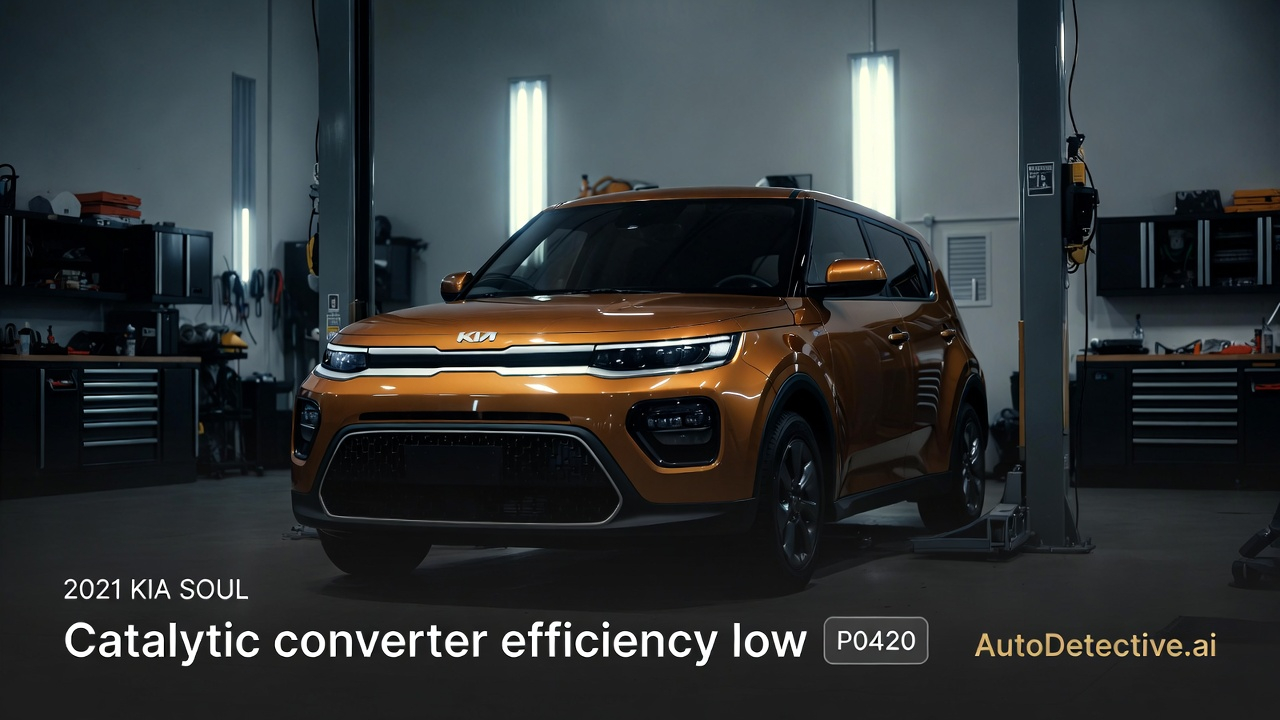
If your 2021 Kia Soul's check engine light is on and a diagnostic scan reveals the P0420 code, you're dealing with a catalytic converter efficiency issue. This OBD-II diagnostic trouble code indicates that your vehicle's onboard computer has detected that the catalytic converter isn't working as efficiently as it should. While this isn't an immediate emergency, it's a medium-severity issue that requires attention soon to prevent further damage and maintain your vehicle's performance.
Understanding the P0420 Code in Your 2021 Kia Soul
The P0420 code specifically means "Catalyst System Efficiency Below Threshold (Bank 1)." Your Kia Soul's engine control module (ECM) monitors the catalytic converter's performance by comparing readings from oxygen sensors located before and after the catalyst. When the downstream oxygen sensor readings too closely mirror the upstream sensor readings, it indicates the catalytic converter isn't effectively converting harmful exhaust gases.
This code is particularly important because the catalytic converter plays a crucial role in reducing your vehicle's emissions. In your 2021 Kia Soul, this component converts harmful pollutants like carbon monoxide, hydrocarbons, and nitrogen oxides into less harmful substances before they exit through the tailpipe.
Symptoms of P0420 Code Issues
When your 2021 Kia Soul triggers a P0420 code, you may notice several symptoms:
- Check engine light: This is often the first and most obvious sign
- Reduced fuel economy: You may notice more frequent trips to the gas station
- Failed emissions test: Your vehicle may not pass state inspection requirements
- Slight reduction in power: Particularly noticeable during acceleration or hill climbing
- Unusual exhaust odor: A sulfur-like smell may be present
- Engine hesitation: Occasional stumbling or rough idle may occur
It's important to note that some drivers may not notice any performance changes initially, making the check engine light the primary indicator of this issue.
Common Causes of P0420 in 2021 Kia Soul
Failing Catalytic Converter (High Probability)
The most common cause of P0420 codes is a degraded catalytic converter. In your 2021 Kia Soul, the catalyst contains precious metals that facilitate chemical reactions to clean exhaust gases. Over time, these metals can become contaminated or worn out, reducing efficiency. While your 2021 model is relatively new, factors like poor fuel quality, engine problems, or manufacturing defects can cause premature catalyst failure.
Faulty Oxygen Sensors (High Probability)
Your Kia Soul has multiple oxygen sensors that monitor exhaust gas composition. When upstream or downstream oxygen sensors fail or become sluggish, they can provide incorrect readings to the ECM. This can trigger a false P0420 code even when the catalytic converter is functioning properly. Oxygen sensors typically last 60,000 to 100,000 miles, but contamination can cause earlier failure.
Engine Misfires or Combustion Issues (Medium Probability)
Unburned fuel from engine misfires can damage your catalytic converter over time. In your 2021 Kia Soul, worn spark plugs, failing ignition coils, or dirty fuel injectors can cause incomplete combustion. This sends raw fuel into the exhaust system, overwhelming the catalytic converter and potentially causing permanent damage.
Exhaust Leak Before Catalyst (Medium Probability)
Air leaks in the exhaust manifold or pipes before the catalytic converter can introduce extra oxygen into the exhaust stream. This affects the air-fuel ratio readings and can trigger a P0420 code. Common leak locations include exhaust manifold gaskets, cracked manifolds, or loose connections.
Contaminated Fuel or Oil Consumption (Low Probability)
Poor quality fuel, certain fuel additives, or excessive oil consumption can contaminate your catalytic converter. While less common in newer vehicles like your 2021 Kia Soul, these issues can poison the catalyst with substances that reduce its efficiency.
Diagnosing P0420 Code Issues
Proper diagnosis is crucial before spending money on repairs. Here's how professionals typically diagnose P0420 issues:
Initial Inspection
A qualified technician will first verify the P0420 code using a professional OBD-II scanner. They'll also check for additional codes that might indicate related problems, such as misfire codes or oxygen sensor codes.
Oxygen Sensor Testing
Using a digital multimeter or oscilloscope, technicians test both upstream and downstream oxygen sensors for proper voltage output and response time. Slow or erratic sensor readings can indicate sensor failure rather than catalytic converter problems.
Exhaust System Inspection
A thorough visual inspection of the exhaust system helps identify obvious problems like leaks, physical damage, or contamination. Technicians may use smoke testing to locate hard-to-find exhaust leaks.
Catalytic Converter Efficiency Testing
Professional diagnostic equipment can measure the actual efficiency of your catalytic converter by analyzing exhaust gases before and after the catalyst. This test definitively determines whether the converter needs replacement.
Repair Options for P0420 Code
Professional Repairs
Most P0420 repairs require professional service, especially for your 2021 Kia Soul which may still be under warranty. Professional repairs ensure proper diagnosis and maintain warranty coverage.
Oxygen Sensor Replacement: If faulty sensors are the culprit, replacement typically takes 1-2 hours and restores proper monitoring.
Catalytic Converter Replacement: When the catalyst has failed, replacement with an OEM or high-quality aftermarket converter is necessary. This is a more involved repair requiring proper equipment and expertise.
Engine Tune-up: Addressing underlying engine problems like worn spark plugs or dirty fuel injectors can prevent future catalyst damage.
DIY Considerations
While some aspects of P0420 diagnosis and repair have moderate DIY feasibility, several factors make professional service advisable for your 2021 Kia Soul:
- Warranty considerations may require dealer service
- Specialized diagnostic equipment needed for accurate testing
- Catalytic converter replacement requires proper tools and safety equipment
- Incorrect diagnosis can lead to unnecessary part replacement
DIY enthusiasts can perform basic maintenance like spark plug replacement or air filter changes that may help prevent future issues.
Repair Cost Breakdown
Repair costs for P0420 issues in your 2021 Kia Soul typically range from $800 to $2,200, depending on the root cause:
Oxygen Sensor Replacement
- Parts: $150-$300 per sensor
- Labor: $100-$200
- Total: $250-$500
Catalytic Converter Replacement
- OEM catalytic converter: $800-$1,500
- Labor: $200-$400
- Total: $1,000-$1,900
Comprehensive Repair
- Multiple components (catalyst + sensors): $1,200-$2,200
- Engine tune-up addition: $200-$400
Always get quotes from multiple shops and verify warranty coverage before proceeding with repairs. Your 2021 Kia Soul may have federal emissions warranty coverage that extends beyond the basic warranty period.
Prevention Tips
Preventing future P0420 codes in your 2021 Kia Soul involves proper maintenance and driving habits:
- Use quality fuel: Choose Top Tier gasoline from reputable stations to minimize contamination
- Regular maintenance: Follow Kia's recommended service schedule for oil changes, spark plugs, and air filters
- Address engine problems promptly: Fix misfires, rough idle, or performance issues immediately
- Avoid short trips: Allow your engine to reach full operating temperature to ensure proper catalyst function
- Don't ignore check engine lights: Early intervention can prevent catalytic converter damage
- Use recommended oil: Stick to Kia-specified oil types and change intervals
Safety Considerations
Your 2021 Kia Soul is generally safe to drive with a P0420 code, but consider these important points:
- Avoid aggressive driving that could stress the exhaust system further
- Monitor for additional symptoms like overheating or unusual noises
- Schedule repair soon to prevent additional damage
- Be aware that fuel economy may be reduced
- Your vehicle may not pass emissions testing until repaired
Frequently Asked Questions
Yes, your vehicle is generally safe to drive with a P0420 code, but you should avoid aggressive driving and schedule repairs soon. Prolonged driving may worsen catalytic converter damage and reduce fuel economy. The code indicates reduced emissions control efficiency but doesn't pose immediate safety risks.
Repair time varies depending on the root cause. Oxygen sensor replacement typically takes 1-2 hours, while catalytic converter replacement can take 3-4 hours. Proper diagnosis may add another hour. Total service time is usually completed within a day at most repair shops.
Your 2021 Kia Soul may be covered under the federal emissions warranty, which covers catalytic converters for 8 years or 80,000 miles. Additionally, your basic warranty may still be active. Check with your Kia dealer to verify coverage before paying for repairs out of pocket.
Yes, contaminated or poor-quality fuel can contribute to catalytic converter problems over time. While one tank of bad gas won't immediately trigger P0420, consistent use of low-quality fuel can contaminate the catalyst. Always use Top Tier gasoline and consider fuel system cleaning if you suspect fuel quality issues.
Yes, an active P0420 code will likely cause your vehicle to fail emissions testing. The code indicates that your catalytic converter isn't meeting efficiency standards required by emissions regulations. You'll need to repair the issue and clear the code before passing inspection.
Not necessarily. Proper diagnosis should identify which specific sensor is faulty. However, if your vehicle has high mileage or one sensor has failed, some technicians recommend replacing both upstream and downstream sensors as preventive maintenance, since they often age similarly.