Safety Warning
- Work with fuel systems requires proper ventilation and fire safety precautions
- Relieve fuel system pressure before disconnecting any fuel lines
- Wear safety glasses and gloves when working around fuel components
- Do not smoke or use open flames near fuel system components
Quick Diagnosis Summary
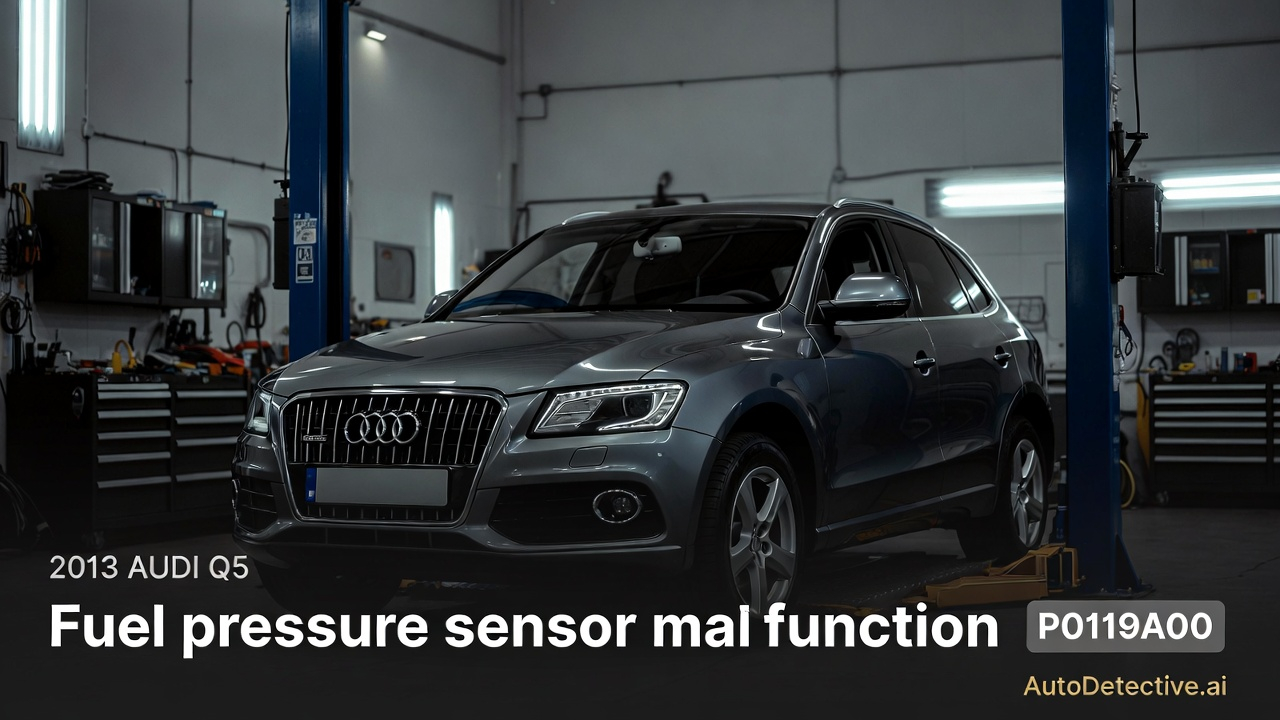
The P0119A00 diagnostic trouble code in your 2013 Audi Q5 indicates a fuel pressure sensor malfunction that requires prompt attention. This code signals that your vehicle's Engine Control Unit (ECU) is receiving incorrect readings from the fuel pressure sensor, which can lead to poor engine performance, rough idling, and starting difficulties. Understanding this issue is crucial for maintaining your Q5's reliability and preventing more serious fuel system problems.
What Does the P0119A00 Code Mean?
The P0119A00 code specifically refers to a "Fuel Pressure Sensor A Circuit High" fault. In your 2013 Audi Q5's 2.0 TFSI engine, this code indicates that the fuel pressure sensor is sending a voltage signal that's higher than the expected range. The ECU uses this sensor to monitor fuel rail pressure and adjust fuel delivery accordingly. When the sensor malfunctions, it can cause the engine management system to make incorrect fuel delivery decisions.
Symptoms of P0119A00 Code in 2013 Audi Q5
When your Q5 triggers the P0119A00 code, you'll likely notice several distinct symptoms that affect your driving experience:
Engine Performance Issues
- Rough idle: Your engine may idle irregularly or feel unstable when stopped
- Hard starting: The engine may take longer to start, especially during cold starts
- RPM fluctuations: You may notice the tachometer needle jumping during startup
- Reduced power: The engine may feel sluggish or lack its usual responsiveness
Fuel System Symptoms
- Poor fuel economy: Your Q5 may consume more fuel than usual
- Engine hesitation: You might experience hesitation during acceleration
- Stalling: In severe cases, the engine may stall unexpectedly
Common Causes of P0119A00 in 2013 Audi Q5
Faulty Fuel Pressure Sensor (High Probability)
The most common cause of P0119A00 is a malfunctioning fuel pressure sensor itself. Located on the fuel rail, this sensor contains internal components that can fail over time. When the sensor's internal circuitry degrades, it sends incorrect voltage signals to the ECU, triggering the code. This is particularly common in vehicles with higher mileage or those exposed to contaminated fuel.
Damaged Wiring Harness (Medium Probability)
The wiring harness connecting the fuel pressure sensor to the ECU can become damaged due to heat, vibration, or corrosion. In the 2013 Q5, this wiring runs through the engine bay where it's exposed to temperature extremes and potential moisture. Corroded connections or frayed wires can cause intermittent signal issues that manifest as the P0119A00 code.
Fuel Pump Regulator Valve Issues (Medium Probability)
Your Q5's fuel system includes a pressure regulator valve that maintains proper fuel rail pressure. If this valve malfunctions, it can cause actual pressure fluctuations that the sensor accurately detects and reports as abnormal. This creates a situation where the sensor is working correctly, but the fuel system itself has a problem.
Carbon Buildup on Intake Valves (Low Probability)
The 2013 Q5's 2.0 TFSI engine uses direct injection, which can lead to carbon buildup on intake valves over time. While this doesn't directly cause fuel pressure sensor codes, severe carbon buildup can affect engine performance enough to trigger various diagnostic codes, including fuel system-related ones.
Diagnosing P0119A00 in Your 2013 Audi Q5
Professional Diagnostic Process
A qualified technician will use specialized equipment to diagnose this issue systematically:
- OBD-II scanner: Confirms the P0119A00 code and checks for related codes
- Fuel pressure gauge: Measures actual fuel rail pressure to verify sensor accuracy
- Multimeter testing: Checks sensor voltage output and wiring continuity
- Visual inspection: Examines the sensor, wiring, and connections for obvious damage
DIY Diagnostic Steps
If you're comfortable working on your vehicle, you can perform some basic diagnostics:
- Use an OBD-II scanner to confirm the P0119A00 code
- Visually inspect the fuel pressure sensor and its wiring for obvious damage
- Check for loose connections at the sensor
- Clear the code and test drive to see if it returns immediately
Repair Options for P0119A00 Code
Professional Repair
Taking your 2013 Q5 to a qualified Audi technician or experienced independent shop ensures proper diagnosis and repair. Professional repair typically includes:
- Complete fuel system pressure testing
- Proper sensor replacement with OEM or high-quality aftermarket parts
- Wiring harness repair or replacement if needed
- System verification and test drive
DIY Repair Considerations
This repair has moderate DIY feasibility for experienced home mechanics. The fuel pressure sensor is accessible, but working with fuel systems requires caution and proper safety procedures. You'll need basic hand tools, safety equipment, and the ability to relieve fuel system pressure safely.
Cost Breakdown for P0119A00 Repair
Professional Repair Costs
- Diagnostic fee: $120-$150
- Fuel pressure sensor replacement: $200-$280 (including labor)
- Wiring harness repair: $150-$250 (if needed)
- Total estimated cost: $150-$350
DIY Parts Costs
- OEM fuel pressure sensor: $80-$120
- Aftermarket sensor: $45-$75
- Wiring repair kit: $20-$35 (if needed)
Prevention Tips for Fuel System Health
Fuel Quality Management
Using high-quality fuel and fuel additives can help prevent sensor contamination and fuel system issues. Consider using Top Tier gasoline and periodic fuel system cleaners designed for direct injection engines.
Regular Maintenance
- Replace fuel filter according to Audi's maintenance schedule
- Address check engine lights promptly
- Perform regular carbon cleaning service for direct injection engines
- Keep fuel tank at least 1/4 full to prevent fuel pump strain
Environmental Considerations
Protect your fuel system from moisture and contaminants by parking in covered areas when possible and avoiding gas stations during fuel delivery times when sediment may be stirred up.
When to Seek Professional Help
While the P0119A00 code indicates a medium-severity issue, you should address it soon to prevent potential fuel system damage or leaving you stranded. Seek immediate professional help if you experience severe symptoms like frequent stalling, inability to start, or strong fuel odors.
Frequently Asked Questions
Yes, you can typically drive short distances with this code, but you should address it soon. The fuel pressure sensor malfunction can cause poor performance, reduced fuel economy, and potential damage to other fuel system components if left unrepaired. Avoid long trips until the issue is resolved.
A professional technician can typically replace the fuel pressure sensor in 1-2 hours, including diagnostic time. The sensor is relatively accessible on the fuel rail, making it a straightforward replacement once the fuel system pressure is properly relieved.
Yes, any active diagnostic trouble code like P0119A00 will typically cause your vehicle to fail emissions testing. You'll need to repair the issue and ensure the code doesn't return before your vehicle can pass inspection.
With proper safety precautions, this is a moderately difficult DIY repair. You must relieve fuel system pressure, work in a well-ventilated area, wear safety equipment, and avoid any ignition sources. If you're not comfortable working with fuel systems, professional repair is recommended.
Ignoring this code can lead to poor fuel economy, engine performance issues, and potential damage to the fuel pump or other fuel system components. The ECU may also enter a reduced power mode to protect the engine, significantly affecting your driving experience.
While bad fuel typically doesn't directly cause sensor failure, contaminated fuel can contribute to fuel system problems over time. However, the P0119A00 code specifically indicates a sensor circuit issue rather than fuel quality problems. Using high-quality fuel can help prevent future fuel system issues.